

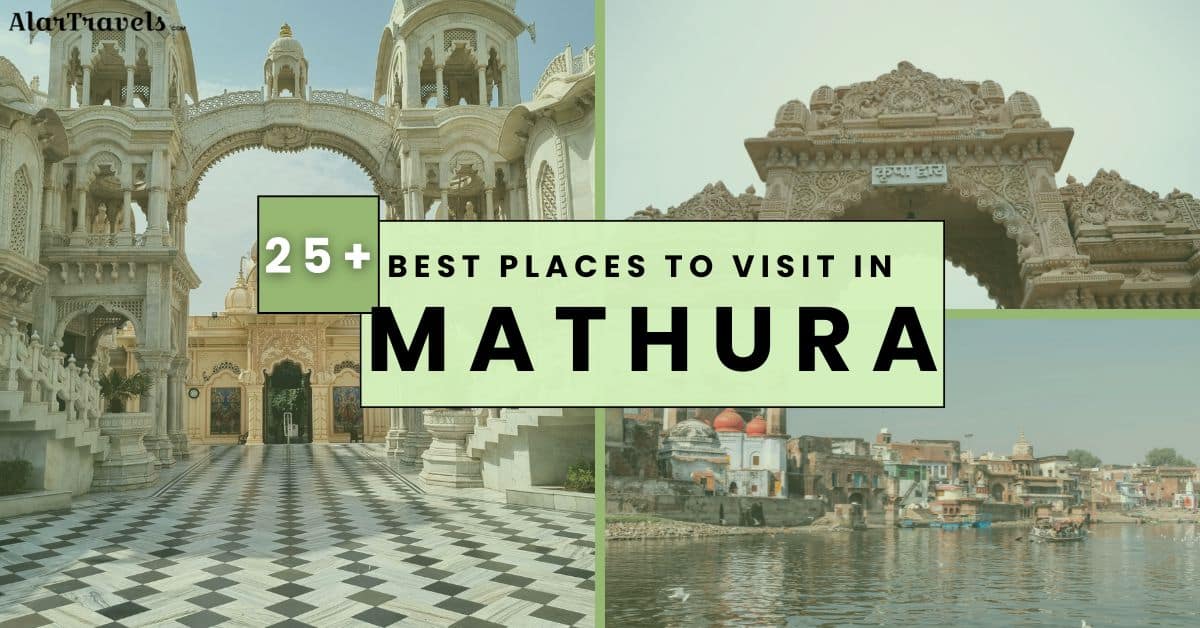
Planning Mathura for a day or two sounds simple until you actually start making the list. You arrive at Mathura Junction, open your phone, and suddenly Krishna Janmabhoomi, Vishram Ghat, Vrindavan, Gokul, Govardhan and Barsana are all being called “Mathura places.” Then comes the real problem: you have limited time, and you don’t want half the trip disappearing in an auto.
I’ve been there with this kind of planning problem before. The trick is to separate Mathura city from the wider Braj region before choosing your route. That one distinction makes the whole trip easier.
This guide covers the 25 best places to visit in Mathura, but it doesn’t pretend they are equally important. Some deserve an hour. Some deserve a few minutes. And some are better saved for a second day.
Why Is Travel Important in Our Life: 10 Benefits of Travel
Travel is more than just visiting new places- it’s about finding new parts of yourself. Why is travel important in our life? This question often comes to mind when we feel the urge to explore. Traveling has many benefits that make our lives better. It helps us see new things, feel happier, and learn more about the world. Continue Reading ►
Mathura Places at a Glance
The first thing to understand is that Mathura and Braj are not the same geographical area. Mathura is the main city, while Vrindavan, Gokul, Govardhan, Barsana, Nandgaon and other places form the wider Braj circuit. The Mathura district administration itself describes Braj across areas on both sides of the Yamuna, including Gokul, Baldeo, Vrindavan, Govardhan, Kusum Sarovar, Barsana and Nandgaon.
Here is a quick planning view. The time estimates are approximate because temple queues, festivals and your own pace can change the day considerably.
| Place | Approx. time | Area | Best for |
|---|---|---|---|
| Shri Krishna Janmabhoomi | 1-1.5 hr | Mathura | First-time visitors |
| Dwarkadhish Temple | 45-60 min | Mathura | Temple visit |
| Vishram Ghat | 45-60 min | Mathura | Yamuna & evening |
| Government Museum | 1-1.5 hr | Mathura | History |
| Kans Qila | 30-60 min | Mathura | Heritage |
| Potara Kund | 20-40 min | Mathura | Short religious stop |
| Gita Mandir | 30-45 min | Mathura | Architecture |
| Bhuteshwar Mahadev | 30-45 min | Mathura | Pilgrimage |
| Jama Masjid | 20-40 min | Mathura | Architecture/history |
| Sati Burj | 20-30 min | Mathura | Heritage |
| Gokul | 2-3 hr | Near Mathura | Braj pilgrimage |
| Vrindavan | 4-8 hr | Near Mathura | Temple circuit |
| Govardhan Hill | 3-5+ hr | Near Mathura | Parikrama/pilgrimage |
| Radha Kund | 30-60 min | Near Govardhan | Pilgrimage |
| Kusum Sarovar | 45-60 min | Near Govardhan | Heritage & quiet time |
| Barsana | 3-5 hr | Braj | Radha temples |
| Nandgaon | 2-3 hr | Braj | Longer Braj circuit |
| Prem Mandir | 1-2 hr | Vrindavan | Architecture |
| Banke Bihari Temple | 1-2 hr | Vrindavan | Devotion |
| ISKCON Temple | 45-90 min | Vrindavan | Temple experience |
| Radha Raman Temple | 45-90 min | Vrindavan | Traditional temple |
| Nidhivan | 30-60 min | Vrindavan | Sacred grove |
| Chandra Sarovar | 30-60 min | Near Govardhan | Quiet Braj stop |
| Raman Reti | 45-90 min | Gokul | Pilgrimage |
| Dauji Temple | 1-2 hr | Baldeo | Temple & local culture |
Don’t try to cover all 25 just because the list says 25. That would be a very tiring trip.
Best Places to Visit in Mathura City
The first ten places below are actually in Mathura city. This is where I would spend most of a first-time one-day Mathura visit.
1. Shri Krishna Janmabhoomi Temple
If you have never been to Mathura before, this is the obvious starting point. Shri Krishna Janmabhoomi is traditionally regarded as the birthplace of Lord Krishna, and the complex is built around the site associated with the prison cell where Krishna is believed to have been born. The Mathura district administration describes the site as one of the city’s principal religious attractions.
The visit is more pilgrimage than sightseeing. That distinction matters.
Security arrangements are strict, and rules regarding phones, bags, footwear and photography can change. The district administration notes that photography is prohibited inside the complex, so don’t arrive assuming this will be a normal camera-friendly monument.
Allow roughly an hour or more, especially if the queue is long. Early visits are generally easier than trying to squeeze this in when the city is already crowded.
Best for: First-time visitors and devotees.
Not ideal for: Anyone expecting a conventional museum-style attraction.
2. Dwarkadhish Temple
Dwarkadhish Temple is one of the central temples of Mathura and pairs naturally with Vishram Ghat because both sit within the old-city sightseeing area. The temple is known for its traditional Krishna worship and elaborate services.
What catches your attention here is the feeling of entering a living temple rather than a preserved monument. The painted interiors and devotional activity make it clear that people are here for worship first.
Temple schedules are important. Many temples in Mathura follow specific darshan windows and may close for periods during the day, with festival schedules differing again. So don’t build your itinerary around one timetable copied from an old blog.
I would keep around 45 minutes to an hour, but give yourself more time if you’re visiting during a busy religious period.
Best for: Devotees and visitors interested in traditional temple life.
Tip: Combine it with Vishram Ghat instead of making a separate cross-city trip.
3. Vishram Ghat
Vishram Ghat is where Mathura starts to feel slower. It sits beside the Yamuna and is one of the most recognisable riverfront places in the city. The district administration lists it among Mathura’s major attractions.
This is not a place I would rush through in fifteen minutes. Give yourself time to sit, watch the river and observe the evening activity.
The most memorable physical detail is the riverfront itself: steps descending toward the Yamuna, with boats and people moving around the water.
Evening is particularly attractive, but that also means more people. Festival evenings can be much more crowded than an ordinary weekday.
If you’re planning your route, Vishram Ghat works beautifully as the final stop of a Mathura city day. You can finish the temple circuit and come here when the heat starts dropping.
Best for: First-time visitors, photographers and anyone wanting a slower stop.
Not ideal for: Travellers who only want monuments and don’t enjoy sitting by the river.
4. Government Museum, Mathura
The Government Museum is an easy attraction to overlook because Mathura’s temples naturally dominate most travel plans. History and art lovers, however, have a good reason to make time for it.
The museum contains archaeological and artistic material connected with the Mathura region, including sculptures and artefacts that help explain why the area has been important far beyond its Krishna pilgrimage identity. Incredible India also highlights the museum’s historical importance and its proximity to major Mathura attractions.
The experience is quieter than the main temple circuit.
That is also why it isn’t for everyone. If your only goal is darshan and ghats, you may prefer to spend the time elsewhere. But if you enjoy understanding a place rather than simply photographing it, this is one of the better additions.
Allow roughly an hour or more.
Best for: History, archaeology and art enthusiasts.
Skip it if: You have only a few hours and this is your first pilgrimage-focused visit.
5. Kans Qila
Kans Qila is connected with the legendary story of King Kansa and belongs to the older historical landscape of Mathura. It is more interesting as part of an old-Mathura route than as a standalone “must-see fort.”
That distinction is worth making because travellers sometimes arrive expecting a grand, fully preserved fort complex. The current experience is more modest.
The rough surfaces and aged appearance are part of what makes the stop feel different from Mathura’s active temples.
Spend around 30 minutes to an hour depending on access and your interest.
I wouldn’t send someone here before Krishna Janmabhoomi or Vishram Ghat on a first visit. But if you’ve already seen the major religious sites and want some historical variety, it becomes more worthwhile.
Best for: Heritage-minded travellers.
Not for everyone: If you want a polished monument with extensive visitor facilities, keep your expectations realistic.
6. Potara Kund
Potara Kund is a short but meaningful stop associated with the Krishna Janmabhoomi area. It makes sense precisely because it doesn’t require another half-day.
The kund is a traditional water structure, and the stone edges give it a distinctly old pilgrimage-site appearance.
I would combine Potara Kund with Krishna Janmabhoomi rather than travelling across Mathura specifically to see it. That is the practical way to use your time.
Allow around 20-40 minutes.
This is particularly useful for visitors who want to understand more of the local religious landscape but don’t have enough time for the museum or a longer heritage stop.
Best for: Pilgrimage-focused itineraries.
Tip: Treat it as a short addition, not a separate major attraction.
7. Gita Mandir / Birla Mandir
Gita Mandir, also commonly referred to as Birla Mandir, is a useful addition when you have already covered Mathura’s essential temples. Its connection with the Bhagavad Gita gives it a natural place in a Krishna-focused itinerary.
The temple’s exterior is more open and monumental than the tight lanes around some of Mathura’s older temples. The carved and painted surfaces are the detail worth slowing down for.
It is not as essential as Krishna Janmabhoomi or Dwarkadhish Temple on a first visit. That’s okay.
If you have half a day extra, though, it gives the itinerary some breathing room instead of making every stop another crowded old-city temple.
Allow roughly 30-45 minutes.
Best for: Architecture and spiritual travellers.
Priority: Optional on a one-day trip.
8. Bhuteshwar Mahadev Temple
Bhuteshwar Mahadev Temple is an important Shiva temple within the Mathura pilgrimage circuit. The district administration lists Bhuteshwar among the city’s significant religious places.
It adds another side to Mathura’s religious identity because the city isn’t only about Krishna temples.
The most noticeable detail is the intimate temple setting, where the atmosphere feels much more devotional than tourist-oriented.
For a devotee following a broader temple circuit, this can be an important stop. For a visitor with only six or seven hours in Mathura, it may not make the cut.
Allow around 30-45 minutes, subject to the day’s temple schedule.
Best for: Devotees and temple-focused travellers.
Skip it if: Your first visit is extremely short and you haven’t seen the main three attractions.
9. Jama Masjid
Mathura’s Jama Masjid gives the sightseeing list some much-needed historical and architectural variety. It sits within the old-city environment and reminds visitors that Mathura’s built heritage is not limited to temples.
The mosque’s façade and domed architectural elements provide a different visual experience from the surrounding Hindu pilgrimage sites.
Visitors should treat it as a religious space rather than simply another photography stop. Dress respectfully, follow local instructions and ask before taking photographs.
Allow roughly 20-40 minutes if access is available.
I wouldn’t force this into a one-day religious itinerary if time is already tight. But for travellers interested in Mathura’s layered history, it deserves consideration.
Best for: Architecture and history enthusiasts.
Important: Respect active religious activity and any restrictions in place during your visit.
10. Sati Burj
Sati Burj is a small historical structure near the old-city and Yamuna-side area. Compared with Krishna Janmabhoomi or Vishram Ghat, it is a much shorter stop.
That is exactly how you should treat it.
The brick-and-stone structure feels like a leftover piece of Mathura’s older riverside landscape rather than a major sightseeing complex.
Give it around 20-30 minutes if it fits your route.
I would only add it after the main sights are covered. If you’re travelling with family members who dislike frequent short stops, this is an easy one to skip.
Best for: Heritage enthusiasts and repeat visitors.
Priority: Optional.
Places Near Mathura Worth Adding to Your Trip
Now comes the important part. The next 15 places are part of the wider Braj region, not Mathura city itself.
The Mathura district administration explicitly identifies Vrindavan, Govardhan, Kusum Sarovar, Barsana and Nandgaon on the western side of the Yamuna, while Gokul and Baldeo lie in the eastern Braj area.
So if someone says they “visited 25 places in Mathura,” they may actually mean they explored the broader Mathura-Braj circuit.
11. Gokul
Gokul is where the trip starts feeling different from Mathura city. It is associated with Krishna’s childhood and has a quieter pilgrimage character than the main Mathura temple areas.
The narrow local lanes and simple temple surroundings are part of the experience. Don’t expect a long collection of monumental attractions.
Gokul works best as a half-day extension. You can combine it with Raman Reti and other nearby Braj sites rather than travelling there for one quick photograph.
For first-time visitors with only one day, I would choose either Gokul or Vrindavan, not both.
Best for: Pilgrims and travellers interested in Krishna’s childhood stories.
Time: Roughly 2-3 hours for a useful visit.
12. Vrindavan
Vrindavan deserves its own time block. It is technically nearby, not another neighbourhood of Mathura.
The town has a huge concentration of temples, including Banke Bihari, ISKCON, Radha Raman and Prem Mandir. The district administration itself lists several Vrindavan temples among the principal tourist attractions of the Mathura district.
The sound of temple bells and devotional music spilling into the narrow lanes is probably the quickest way to understand why people find it difficult to “finish” Vrindavan.
Don’t try to cover everything.
For a first visit, four to six hours can give you a useful introduction. A full day is better if you want to explore slowly.
Best for: Temple lovers and longer Braj trips.
Not ideal for: A rushed one-day Mathura itinerary.
13. Govardhan Hill
Govardhan Hill is one of the major pilgrimage destinations around Mathura and is traditionally associated with Krishna lifting Govardhan to protect the people of Braj.
The important practical point is that Govardhan is not simply a viewpoint where you spend twenty minutes and leave. The parikrama changes the nature of the visit completely.
The rough road and long walking stretches are the physical reality you should prepare for.
You don’t have to do the full parikrama if you don’t have the time or physical ability. Choose a smaller visit around key places instead.
Best for: Devotees and travellers comfortable with walking.
Not for everyone: Heat, crowds and long walking distances can make this demanding.
14. Radha Kund
Radha Kund is closely associated with the Govardhan side of the Braj pilgrimage circuit. For devotees, it carries considerably more significance than its small physical size might suggest.
The water body and surrounding ghats are the central physical feature of the visit.
This isn’t really a “sightseeing attraction” in the usual sense. It is a place where religious practice matters more than taking photographs.
Combine Radha Kund with Govardhan rather than making a separate day out of it.
Best for: Devotees and spiritually focused travellers.
Tip: Dress respectfully and be mindful around ritual areas.
15. Kusum Sarovar
Kusum Sarovar is one of the most rewarding stops around the Govardhan area, particularly if you want a quieter break from temple crowds.
The sandstone-coloured structures beside the water are the detail that makes the place memorable.
Incredible India identifies Kusum Sarovar as a nearby attraction in the Mathura region, and the district administration also includes it within the wider Braj landscape.
Late afternoon can be pleasant for photography, although light and crowd levels naturally vary.
Allow around 45 minutes to an hour.
Best for: Architecture, photography and a slower Braj itinerary.
Best combined with: Govardhan and Radha Kund.
16. Barsana
Barsana is associated with Radha and is one of the most important towns in the wider Braj circuit. Its main attraction is the Radha Rani Temple, which the Mathura district administration identifies as a principal attraction of the town.
The approach involving steps is something to remember if you’re travelling with elderly family members.
Barsana becomes a completely different experience during Holi, particularly Lathmar Holi. Incredible India highlights the festival as a major attraction, but festival crowds also mean much more complicated travel logistics.
I would reserve at least half a day.
Best for: Devotees and travellers exploring the Radha-focused side of Braj.
Festival warning: Don’t treat a Holi visit like an ordinary sightseeing day.
17. Nandgaon
Nandgaon belongs to the longer Braj circuit and is traditionally connected with Krishna’s childhood and Nanda’s household.
The hilltop temple setting is the physical detail that makes the visit feel different from the flat old-city areas of Mathura.
Nandgaon is not something I would squeeze into a first-time one-day Mathura itinerary. It becomes worthwhile when you’re already planning Barsana and want to continue through the Braj countryside.
Allow roughly 2-3 hours, depending on how much of the surrounding area you explore.
Best for: Longer Braj circuits.
Skip it if: You have less than two days.
18. Prem Mandir, Vrindavan
Prem Mandir is one of the most visually striking modern temples in Vrindavan. Unlike the older temple complexes, its scale and polished white exterior give the visit a very different character.
The detailed carvings across the white stone surfaces are what you’ll probably notice first.
It is not an ancient temple in the same sense as Banke Bihari or Radha Raman, so history-focused travellers may rank it differently. But for architecture and evening atmosphere, it is an easy addition to a Vrindavan route.
Allow roughly one to two hours, particularly if you want time around the complex.
Best for: Architecture, families and first-time Vrindavan visitors.
Tip: Combine it with other Vrindavan attractions rather than making a separate trip from Mathura.
19. Banke Bihari Temple, Vrindavan
Banke Bihari Temple is one of the most famous Krishna temples in Vrindavan. The Mathura district administration describes it as a major temple dedicated to Krishna and lists it among the area’s important tourist places.
The atmosphere inside and around the temple is intensely devotional, particularly when crowds build up.
The narrow approach lanes and clusters of devotees are the physical reality to expect.
This is not the place for a leisurely architectural inspection during peak crowd periods. You are primarily coming for darshan.
Keep your belongings simple, follow the temple’s current instructions and allow extra time for queues.
Best for: Devotees and first-time Vrindavan visitors.
Not for everyone: Crowds can feel overwhelming, especially during festivals.
20. ISKCON Temple, Vrindavan
The ISKCON Krishna-Balaram Temple gives Vrindavan a more organised and international-facing temple experience. The district administration identifies it as one of the city’s major temples.
Compared with some of the old Vrindavan temples, the complex feels more open and structured.
The white temple walls and devotional chanting are the sensory details that stay with most visitors.
It can work well for families because the visit is relatively straightforward, although peak times can still become crowded.
Allow around 45-90 minutes.
Best for: First-time visitors, families and travellers interested in Krishna devotion.
Combine with: Banke Bihari or Prem Mandir.
21. Radha Raman Temple, Vrindavan
Radha Raman Temple is one of the older and more traditional temple experiences in Vrindavan. The district administration lists it among the town’s principal attractions.
It is better suited to visitors who enjoy smaller historic temples and devotional atmosphere than those looking for large modern complexes.
The carved wooden and stone details around the old temple setting are worth noticing.
Allow around 45-90 minutes, depending on the crowd and your interest.
I would choose Radha Raman over adding yet another large temple if you are already spending a full day in Vrindavan.
Best for: History and traditional temple architecture.
Priority: High for serious temple enthusiasts, optional for casual visitors.
22. Nidhivan
Nidhivan is one of Vrindavan’s most distinctive sacred spaces. It is a grove rather than a conventional temple complex and carries a strong devotional tradition.
The twisted, low trees are the physical detail that makes the place immediately different from the rest of Vrindavan.
Visitors should approach it respectfully. Local religious beliefs surrounding the site are central to its identity, so it is better experienced as a sacred place rather than a curiosity.
Don’t rush in, take a few photographs and leave.
Allow around 30-60 minutes, depending on access and crowd conditions.
Best for: Visitors interested in Braj traditions and sacred spaces.
Important: Follow local instructions and respect restrictions.
23. Chandra Sarovar
Chandra Sarovar is a quieter Braj stop that works particularly well for travellers who are tired of crowded temple lanes.
The water body and surrounding open landscape give you a chance to slow down.
It is not as immediately famous as Govardhan or Vrindavan, which is part of its appeal. But I wouldn’t make a special long journey here if your itinerary is already packed.
Add it when you’re exploring the Govardhan side of Braj and have time left.
Best for: Slow travel, photography and quieter stops.
Not for everyone: First-time visitors with limited time should prioritise the major pilgrimage sites.
24. Raman Reti, Gokul
Raman Reti is in the Gokul area and is associated with the childhood stories of Krishna and Balarama. The Mathura district administration specifically lists Raman Reti among the area’s tourist places.
The sandy ground is the physical detail that gives the place its identity.
It works naturally with Gokul rather than as an independent excursion from Mathura.
Spend roughly 45-90 minutes depending on your pace and religious interest.
If you have elderly travellers with you, keep the walking conditions in mind before planning several Gokul stops together.
Best for: Pilgrims and visitors exploring Krishna’s childhood associations.
Combine with: Gokul and Mahavan-area attractions.
25. Dauji Temple, Baldeo
Dauji Temple in Baldeo gives you another reason to explore beyond Mathura city. The district administration specifically lists Baldeo and Dauji Mandir among the important places connected with Mathura.
The temple is dedicated to Lord Balarama, Krishna’s elder brother, and provides a different focus from the Krishna-centric stops most visitors choose.
The temple courtyard and devotional activity are the physical details to pay attention to.
This is not a place I would add to a one-day Mathura trip. It makes more sense if you’re deliberately exploring the eastern Braj side.
Best for: Pilgrims and travellers completing a wider Braj circuit.
Priority: Optional unless Balarama-related pilgrimage is important to you.
Which Mathura Places Are Actually Worth Your Time?
The number 25 can be misleading. You do not need to visit 25 places to have a good Mathura trip.
For a first visit, my priority would be:
Must-see in Mathura:
- Shri Krishna Janmabhoomi
- Dwarkadhish Temple
- Vishram Ghat
Worth adding if you have extra time:
- Government Museum
- Gita Mandir
- Potara Kund
- Bhuteshwar Mahadev
- Kans Qila
For a wider Braj trip:
- Gokul
- Vrindavan
- Govardhan
- Kusum Sarovar
- Barsana
And then there are the specialist or quieter additions such as Radha Kund, Nandgaon, Chandra Sarovar and Dauji Temple.
That is a much more useful way to think about the list.
Mathura and Vrindavan in One Day -Is It Realistic?
Yes, but only if you’re happy with highlights.
You can start in Mathura with Krishna Janmabhoomi and Dwarkadhish Temple, then move towards Vrindavan for two or three major temples. The problem is not the number of kilometres alone. It is queues, traffic, walking through temple lanes and the fact that each place has its own rhythm.
I would not try to include Gokul or Govardhan on the same day.
If your main goal is to say you’ve “seen” both Mathura and Vrindavan, one day can work. If you want to actually experience both, give them more time.
Places to Visit in Mathura in One Day
For one day, keep the route simple.
Morning:
Start with Shri Krishna Janmabhoomi, then visit Potara Kund and move towards Dwarkadhish Temple.
Late morning:
Explore the old-city area and have a local breakfast or early lunch. Mathura’s peda, kachori, jalebi and lassi are among the foods highlighted by Incredible India.
Afternoon:
Choose either the Government Museum or a rest break. Don’t underestimate the value of the second option.
Evening:
Head to Vishram Ghat and spend some time beside the Yamuna.
If you are fitting Mathura into a short break, our How To Plan A Perfect Weekend Trip Guide is useful for working out what deserves your limited time and what can wait for another trip.
I would not add Vrindavan, Govardhan and Gokul to this route. That sounds impressive on paper. In reality, it can become a day spent mostly travelling.
Mathura in 2 Days: A Better Pace
Two days change the trip considerably.
Day 1 -Mathura city
Krishna Janmabhoomi → Potara Kund → Dwarkadhish Temple → Government Museum → Vishram Ghat.
You can add Bhuteshwar Mahadev or Kans Qila if you still have time.
Day 2 -Choose one Braj circuit
Option 1: Vrindavan
Banke Bihari → ISKCON → Radha Raman → Nidhivan → Prem Mandir.
Option 2: Govardhan side
Govardhan → Radha Kund → Kusum Sarovar → Chandra Sarovar.
Option 3: Gokul/Baldeo side
Gokul → Raman Reti → Baldeo/Dauji Temple.
Do not try to complete all three.
If your dates are flexible and keeping the overall cost down matters, our Best Time For A Budget Trip guide can help you think through timing before you book.
Best Time to Visit Mathura
For comfortable sightseeing, October to March is generally the easier period. Incredible India also recommends this window for pleasant weather.
The catch is that “best weather” and “best festival experience” are not necessarily the same thing.
Holi can be extraordinary in Braj, especially around Barsana, while Janmashtami brings major celebrations around Mathura. But these periods also bring heavy crowds, more traffic and a very different travel experience.
Summer is less forgiving. Walking around temple areas in strong afternoon heat can drain you quickly.
Monsoon can make outdoor walking less predictable, although the landscape around Braj can feel different after rain.
If you’re travelling mainly for sightseeing, winter is the safer choice. If you’re travelling specifically for Holi or Janmashtami, accept that the crowd is part of the experience.
How to Reach Mathura
Mathura is particularly convenient for train travel. The district administration lists Mathura Junction and Mathura Cantt among its railway stations, with regular trains connecting the city to major parts of India.
By Train
For many Indian travellers, the train is the simplest option. Mathura Junction is a major rail stop, so check trains from your city before considering more complicated road combinations.
Your final local ride from the station can be by auto, e-rickshaw or cab depending on luggage and destination.
Don’t assume the cheapest-looking local ride will always save time. In old-city traffic, a convenient drop can be worth paying a little more.
By Road
Mathura is well connected by road and is particularly convenient for travellers coming from Delhi and Agra. The district administration places Mathura roughly 145 km from Delhi and around 58 km from Agra, though your actual journey time will depend heavily on traffic and your starting point.
Buses, private cars and taxis are the practical choices.
For a same-day road trip, leave enough buffer for traffic rather than planning every stop down to the minute.
By Air
Mathura does not have its own commercial airport. The district administration identifies Kheria Airport in Agra as the nearer airport option and also lists Delhi’s Indira Gandhi International Airport.
For most travellers, flying only makes sense when the overall journey from the airport works better than taking a train.
Getting Around Mathura
For central Mathura, walking and e-rickshaws can be practical. Autos are useful for longer short-distance trips, while a cab becomes more sensible if you’re visiting several places outside the city.
For Gokul, Govardhan, Barsana or Nandgaon, consider arranging transport for the larger circuit rather than negotiating a separate ride at every stop.
As a rough planning rule, keep some cash for small local expenses even though UPI is widely useful in India. Local fares can change, so confirm the price before starting.
The biggest mistake is trying to save a few rupees while losing an hour.
Mathura Travel Tips
Temple visits need slightly different preparation from an ordinary sightseeing trip.
Carry water, especially outside the cooler months. Wear comfortable footwear because you’ll be walking and standing more than the attraction list suggests.
Keep clothing modest for religious sites and carry a small bag where possible. Large bags can make security checks more inconvenient.
Most importantly, rules vary between temples. Phone restrictions, photography rules, footwear arrangements and queue systems can change, so follow the signage and security staff on the day.
Festival periods are another matter entirely. Holi and Janmashtami can change crowd levels, road movement and accommodation demand dramatically.
If you’re travelling with elderly family members, don’t build an itinerary that requires constant walking and standing. One slower temple visit can be more enjoyable than four rushed ones.
What to Eat in Mathura
You cannot really discuss Mathura without mentioning peda.
Then there are kachori, jalebi and lassi, all closely associated with the city’s food culture. Incredible India also highlights street-food areas around Chowk Bazaar, Holi Gate and the Dwarkadhish Temple area.
The smell of hot kachori and sweet syrup from jalebi stalls is one of those small details that makes an old-city morning feel distinctly Mathura.
For street food, choose stalls with steady customer turnover and food being prepared fresh. Hygiene standards vary, so don’t assume a famous-looking shop is automatically the right choice for you.
And if you have only one day, don’t spend half of it chasing food recommendations.
How Much Does a Mathura Trip Cost?
Your budget depends heavily on where you are coming from and whether you’re staying overnight.
For local sightseeing only, a budget traveller might plan approximately ₹500-₹1,000 for basic local transport and food, excluding long-distance travel.
A more comfortable day with more frequent autos, cabs and better meals could be around ₹1,000-₹2,000, again excluding your train, bus, hotel or intercity transport.
These are only planning ranges.
Festival dates, private cabs, accommodation demand and local transport negotiations can push the cost considerably higher. For a two-day trip, accommodation becomes the biggest variable.
Which Mathura Trip Should You Choose?
If You Have Half a Day
Don’t try to be clever.
Visit Krishna Janmabhoomi → Dwarkadhish Temple → Vishram Ghat.
If time gets tight, drop everything else. You will get a much better feel for Mathura by properly experiencing three places than by racing through eight.
If You Have One Full Day
Use the same three as your foundation, then add Government Museum, Potara Kund, Gita Mandir or Bhuteshwar Mahadev depending on your interests.
If the day starts running late, drop the optional attractions first.
Do not sacrifice Vishram Ghat just to tick another name off the list.
If You Have Two Days
Spend the first day in Mathura city.
Use the second day for one Braj circuit: Vrindavan, Gokul/Baldeo or Govardhan/Barsana-side exploration.
This is the version I would choose if you have the flexibility.
Final Thoughts: See Less, Experience More
Mathura is one of those places where a longer attraction list doesn’t necessarily make a better trip.
If you have only one day, stay mostly in Mathura. See Krishna Janmabhoomi, spend time around Dwarkadhish and finish beside the Yamuna at Vishram Ghat. If you have two days, give the second day to one part of Braj rather than trying to collect every famous name.
And if you return later, that’s not a failure.
There is enough around Mathura, Vrindavan, Gokul, Govardhan and Barsana to justify coming back without turning the first visit into a race. We at AlarTravels would much rather help you plan a trip that feels manageable than tell you that 25 places must fit into 24 hours.
Take your time. Leave a little space in the day. Mathura is better experienced that way.
Keep following AlarTravels for more practical travel guides that help you decide what is actually worth your time.
Planning Mathura but not sure how to fit it all in?
Mathura is easy to underestimate. You can cover the main city sights in a day, but adding Vrindavan, Gokul, Govardhan or other Braj places changes the pace quickly. If you already know your dates and want a plan built around the time you actually have, a custom itinerary can take the guesswork out of it.
With an AlarTravels Custom Travel Itinerary, you can plan around:
- The places you genuinely want to visit
- Your available number of days
- A practical day-by-day route
- Transport and sightseeing priorities
- A pace that suits your trip rather than trying to cover everything
Get Your Custom Travel Itinerary →
Frequently Asked Questions
What are the best places to visit in Mathura?
For a first trip, prioritise Shri Krishna Janmabhoomi, Dwarkadhish Temple and Vishram Ghat. If you have additional time, add the Government Museum, Gita Mandir or Potara Kund. For a longer Braj trip, consider Vrindavan, Gokul or Govardhan.
What is Mathura famous for?
Mathura is best known for its association with Lord Krishna, its temples, Yamuna ghats and wider Braj pilgrimage traditions. The city also has important archaeological, artistic and historical attractions, including the Government Museum.
How many days are enough for Mathura?
One day is enough for the main Mathura city attractions. Two days are better if you want to explore the wider Braj region without rushing. Vrindavan, Govardhan and Barsana should ideally be treated as additional time rather than quick side trips.
Can Mathura and Vrindavan be covered in one day?
Yes, if you only want highlights. You can cover the main Mathura attractions in the morning and several major Vrindavan temples later. But you won’t experience either place deeply. For a slower trip, give each its own day.
What are the best places to visit near Mathura?
Popular nearby Braj destinations include Gokul, Vrindavan, Govardhan, Radha Kund, Kusum Sarovar, Barsana and Nandgaon. Prem Mandir, Banke Bihari Temple, ISKCON Temple and Radha Raman Temple are major Vrindavan additions.
What is the best time to visit Mathura?
October to March is generally the easiest period for comfortable sightseeing. Holi and Janmashtami are special times to visit if you specifically want festival celebrations, but expect substantially larger crowds and more complicated travel.
Is Mathura suitable for a one-day trip?
Yes. Keep the itinerary focused on Krishna Janmabhoomi, Dwarkadhish Temple and Vishram Ghat, with one or two optional additions. Trying to add Vrindavan, Gokul and Govardhan will make the day unnecessarily rushed.
What local food should I try in Mathura?
Try Mathura peda, kachori, jalebi and lassi. Street food around the old-city areas is an easy addition to a sightseeing day. Choose busy stalls with fresh turnover rather than selecting a shop solely because it appears on a list.

Enjoying AlarTravels? ❤️
We create free travel guides, practical tips, and resources to make your journeys easier.
If something you found here helped you plan better, a small contribution can help us keep creating useful travel resources for everyone.
Every bit of support means a lot. ❤️
❤️ Support AlarTravels


