

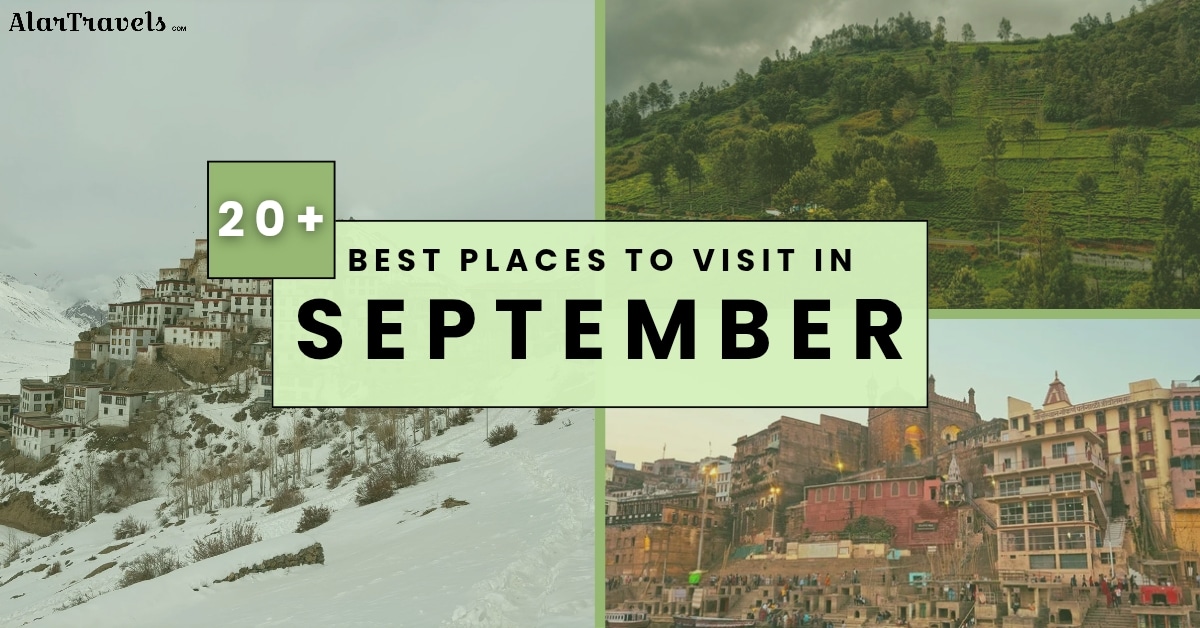
Planning a September trip in India can be oddly frustrating. You find one place looking lush and beautiful after the monsoon, then discover another is still dealing with heavy rain, slippery roads or sticky afternoon heat. I’ve been there too – opening too many tabs, comparing destinations that look equally tempting, and still wondering which one actually makes sense in September. The problem isn’t finding beautiful places. It is finding places that work with September weather. So I’ve deliberately not treated every destination equally here. Some are excellent this month; some are conditional. I’ll compare weather, rain risk, trip length, traveller type and approximate budget – plus one reason to think twice before booking each.
Why Is Travel Important in Our Life: 10 Benefits of Travel
Travel is more than just visiting new places- it’s about finding new parts of yourself. Why is travel important in our life? This question often comes to mind when we feel the urge to explore. Traveling has many benefits that make our lives better. It helps us see new things, feel happier, and learn more about the world. Continue Reading ►
20+ Best Places to Visit in September in India
September is a transition month, and that matters more in India than a simple “monsoon is ending” label suggests. Ladakh can be entering its clearer autumn period while Kerala may still be wet. Rajasthan can work for heritage trips, while Goa can remain unpredictable for a beach holiday. Current tourism guidance also places Ladakh’s autumn period in September-October, while official Maharashtra tourism identifies late August to early October as the main Kaas flowering period.
So here’s the quick shortlist. These are approximate planning figures, not fixed prices. A weekend, flight booking, festival period or last-minute hotel can change the final cost considerably.
| Destination | Best For | September Weather | Rain Risk | Ideal Days | September Verdict |
|---|---|---|---|---|---|
| Ladakh | Adventure | Cool/dry | Low | 5-7 | Excellent |
| Kashmir | Couples/nature | Pleasant | Low-Moderate | 4-6 | Excellent |
| Spiti Valley | Road trips | Cool/dry | Low | 5-7 | Excellent |
| Coorg | Greenery | Cool/wet | Moderate | 2-3 | Very good |
| Munnar | Nature/couples | Pleasant/wet | Moderate | 3-4 | Very good |
| Ooty | Families/couples | Cool | Moderate | 2-3 | Very good |
| Wayanad | Nature | Green/wet | Moderate | 2-3 | Very good |
| Udaipur | Couples/heritage | Warm/pleasant | Low-Moderate | 2-3 | Good |
| Goa | Beaches | Warm/showery | Moderate-High | 3-4 | Conditional |
| Kaas Plateau | Flowers/nature | Mild/wet | Moderate | 1-2 | Excellent if bloom conditions cooperate |
*Approximate on-ground planning range per person; transport from your home city can substantially alter the total.
If you only have time to shortlist five, I’d start with Ladakh, Kashmir, Coorg, Munnar and Kaas Plateau. But your choice changes quickly if you hate rain, have only two days, or want an easy family holiday.
1. Ladakh, Ladakh
If September is about getting away from India’s lingering monsoon, Ladakh is one of the strongest choices. The landscape has shifted towards autumn, the high-altitude desert is crisp rather than humid, and September sits inside Ladakh’s recognised summer/autumn travel window.
A practical 5-7 day trip can revolve around Leh, Nubra Valley and Pangong Lake, although I would not try to squeeze every possible pass and valley into one itinerary. Ladakh is better when you leave some breathing room. The first thing to respect is altitude. Ladakh Tourism currently advises at least 48 hours of complete acclimatisation in Leh before travelling higher, so a rushed arrival followed by an immediate Pangong or Nubra drive is a poor idea.
For an Indian traveller, a rough trip budget can easily move into the ₹30,000-₹50,000+ range per person depending on flights, shared transport, hotels and activities. Flights are faster; road approaches take substantially longer but become part of the adventure.
The sharp sensory detail here is the dry mountain air around Leh – it feels completely different from the humid monsoon plains.
Ladakh suits adventure travellers, photographers and road-trip lovers. It is not my first recommendation for someone wanting a relaxed holiday with short drives and little physical adjustment.
If you’re seriously considering Ladakh for September, our guide on planning a budget trip to Leh Ladakh is worth reading before you start booking transport and accommodation.
September verdict: Excellent for adventure, provided you respect altitude, road conditions and acclimatisation.
2. Kashmir
Kashmir is probably the easier mountain recommendation for travellers who want dramatic scenery without taking on Ladakh’s altitude. Srinagar makes a convenient base, with Dal Lake, houseboats, Gulmarg, Pahalgam and Sonamarg giving you several ways to build a four-to-six-day trip.
September can be comfortable, but I would not sell it as a guarantee of cloudless mountain weather. Conditions can change as you move from Srinagar into higher areas. That matters if your entire plan depends on long-distance mountain views.
For couples, the houseboat experience on Dal Lake is an obvious draw, but it doesn’t have to be treated like a honeymoon-only destination. Families can also use Srinagar as a base and make day trips according to weather.
A rough comfortable budget might fall around ₹20,000-₹35,000+ per person excluding flights, depending heavily on hotel choice and local transport. A shared taxi can change the economics considerably.
The small detail I like is the quiet movement of a shikara across Dal Lake early in the morning, when the water can feel almost still.
Kashmir is better for travellers who want scenery with a relatively conventional holiday structure. If you are expecting peak-summer greenery or guaranteed dry weather, I’d keep expectations flexible.
September verdict: Excellent for couples and families who want mountains without Ladakh-level altitude.
3. Spiti Valley, Himachal Pradesh
Spiti is for the traveller who looks at a normal hill-station holiday and thinks, “I want something harder.” September works particularly well for a Spiti road trip because the valley sits in a much drier Himalayan landscape than monsoon-exposed parts of Himachal.
A 5-7 day trip can focus on Kaza, Key, Kibber and surrounding villages, depending on the route and current road conditions. Chandratal can also be considered only when seasonal access is confirmed. I would not build an entire itinerary around one high-altitude road opening.
This is not a destination where a six-hour road journey should be mentally counted as “six hours of sightseeing.” Mountain roads take energy. Delays happen. Your ₹20,000-₹35,000+ approximate budget can also rise quickly if you hire a private vehicle.
The visual detail is the almost bare, brown-and-grey mountains around Kaza, broken by patches of green settlement.
Spiti is excellent for experienced road trippers, photographers and people who enjoy remote landscapes. It is not for everyone. Limited comforts, altitude, long drives and changing road conditions can make it tiring.
I could be wrong about any individual route remaining easy on your travel dates, so check local conditions immediately before leaving.
September verdict: Excellent for experienced Himalayan road-trippers; poor choice if comfort and predictable travel matter most.
4. Coorg, Karnataka
Coorg is one of my easier September recommendations, especially for travellers from Bengaluru or Mysuru who don’t want to spend half their holiday getting there. September keeps the Western Ghats green, and lingering rain can add exactly the misty atmosphere many people come here for.
Base yourself around Madikeri, then combine coffee-estate experiences with places such as Abbey Falls and nearby viewpoints. You don’t need a packed sightseeing schedule. Two or three days is enough for a relaxed weekend.
The catch is obvious: September can still be wet. A waterfall visit may be lovely one morning and inconvenient the next. Plantation roads and walking areas can also become slippery.
A rough ₹5,000-₹10,000 per-person on-ground budget for a short trip is possible with sensible accommodation and shared transport, though weekend hotel prices can push it higher.
One detail worth looking for is the smell of wet coffee plants after rain. That is much more memorable than ticking off another viewpoint.
Coorg works for couples, families and weekend travellers. It does not suit someone whose idea of a good holiday requires three consecutive sunny days outdoors.
September verdict: Very good if you actively like greenery, mist and occasional rain.
5. Munnar, Kerala
Munnar makes sense in September for a very particular reason: you are choosing the landscape because it has been shaped by rain. Tea-covered hills, mist and lush roadside vegetation can make the drive from Kochi feel like the holiday has started before you reach town.
A three-to-four-day trip can cover tea estates, viewpoints, waterfalls and slower mornings around the hills. Couples and families can both enjoy it, but your itinerary needs flexibility. A heavy shower can turn a planned outdoor afternoon into a café-and-tea-estate kind of day.
A rough ₹7,000-₹14,000 per-person on-ground budget is reasonable for comfortable planning, excluding flights and depending on hotel standards.
The sharp detail is the damp green tea leaves disappearing into low cloud around a hillside bend.
Munnar is not the destination I’d choose if your holiday means guaranteed blue skies and outdoor sightseeing from morning to evening. Kerala can still receive showers in September.
But if rain doesn’t ruin the experience for you, Munnar is one of the best places to visit in September in India for couples and families looking for greenery.
September verdict: Very good for misty hills and tea landscapes, conditional for sun-dependent travellers.
6. Wayanad, Kerala
Wayanad is a strong choice for travellers who want Kerala’s forests and hills without making the trip entirely about tea plantations. September can leave the region intensely green, with waterfalls, viewpoints and forest landscapes benefiting from the preceding monsoon.
Two or three days works well. You can combine viewpoints and waterfalls with a wildlife or forest experience, but don’t make the mistake of treating every trail as automatically accessible after heavy rain.
Waterfall conditions deserve particular attention. Water levels can change, rocks become slippery, and authorities may restrict access when conditions are unsafe.
A practical approximate budget is around ₹6,000-₹12,000 per person for a short comfortable stay, excluding long-distance transport.
The small thing I would remember is the sound of water running beside the road after a spell of rain.
Wayanad suits travellers who don’t mind wet shoes and changing plans. Comfortable walking shoes with decent grip are more useful here than fashionable footwear.
September verdict: Very good for greenery and nature, provided you respect rain-related restrictions.
7. Ooty, Tamil Nadu
Ooty is the practical September hill station. You don’t need a complicated Himalayan plan, and families can build a comfortable two- or three-day trip around the town.
The Botanical Gardens, Ooty Lake, viewpoints and Nilgiri Mountain Railway give you enough variety without forcing an exhausting schedule. If the toy train is important to you, check the current operating schedule before travelling rather than assuming your preferred service will be available.
September weather can be cool, but rain and mist are still possible. Weekend crowds can also change the feel of popular attractions.
From Coimbatore, Ooty is a straightforward road-trip option, although hill-road travel takes longer than the map may suggest. A rough ₹5,000-₹10,000 per-person budget can work for a short trip depending on your hotel and transport.
The small sensory detail is the damp chill that settles around Ooty’s gardens when mist rolls in.
Ooty is especially suitable for families and couples wanting an easy hill break. It is less attractive if you want rugged adventure or completely uninterrupted mountain views.
If Ooty makes your September shortlist, I’d also keep our detailed guide to the best places to visit in Ooty handy so you can decide what to cover during a 2-3 day trip.
September verdict: Very good for short family and couple trips.
8. Udaipur, Rajasthan
Udaipur gives September travellers a useful escape from the usual mountain-and-monsoon list. You get City Palace, Lake Pichola and Monsoon Palace, along with a city that works particularly well around sunrise, late afternoon and evening.
September should not be confused with Rajasthan’s cool season. Afternoons can still feel warm, so I would avoid planning three hours of exposed fort sightseeing at midday.
Two or three days is enough for the main experience. A rough ₹6,000-₹12,000 per-person on-ground budget can work across budget and mid-range travel, although premium lakeside hotels can push the figure much higher.
The sensory detail here is the reflection of Udaipur’s palace lights on Lake Pichola after sunset.
Udaipur works beautifully for couples and heritage-focused travellers. Families can enjoy it too. It is less suitable if your only reason for travelling in September is to escape heat.
September verdict: Good for heritage, food and couples; plan outdoor sightseeing around comfortable hours.
9. Goa
Goa deserves an unusually honest recommendation in September.
If you picture Goa as lying on a beach under uninterrupted sunshine, September is probably the wrong month. Showers remain possible, sea conditions can restrict water activities, and some beach-focused plans simply won’t work as expected.
But that doesn’t make Goa useless.
The state can be remarkably green after the rains, and a three-to-four-day trip can focus more on food, cafés, heritage, churches, drives and relaxed exploration. North Goa offers a different atmosphere from quieter stretches in South Goa, so choose your base according to the holiday you actually want.
A rough ₹7,000-₹15,000 per-person budget can work for a comfortable short trip, excluding flights and depending heavily on accommodation.
The detail that makes September Goa different is the wet red earth beside the roads after a shower.
Goa is for travellers who can say, “Rain is fine; I just want to be there.” It is not my recommendation for someone whose number-one goal is swimming and guaranteed beach weather.
September verdict: Conditional. Great if you accept rain; wait for the drier season if beaches are the priority.
10. Kaas Plateau, Maharashtra
Kaas Plateau is perhaps the most genuinely September-specific recommendation on this list. The flowering season generally falls from late August into early October, although the exact display depends on rainfall. Maharashtra Tourism notes that more than 850 flowering plant species occur across the plateau, with the seasonal bloom forming one of its defining attractions.
This isn’t a conventional hill station. You go to walk, photograph and observe a temporary landscape. That distinction matters.
A one- or two-day trip works well from Pune or Satara, with Satara being the closer regional hub. The terrain can be slippery in wet conditions, and visitor numbers may be regulated because the plateau is ecologically sensitive. Advance entry arrangements are therefore worth checking.
A modest ₹2,000-₹5,000 approximate local-trip budget is possible depending on where you start and stay.
The sharp detail is the tiny flowers scattered across the grass rather than one giant field of identical colour.
Kaas is excellent for photographers and nature lovers. It is not worth travelling a long distance for if you require a guaranteed peak bloom.
September verdict: Excellent for a seasonal nature trip – but verify bloom conditions first.
11. Ziro Valley, Arunachal Pradesh
Ziro is the choice for someone who wants the journey itself to feel like part of the story. September brings green paddy fields, pine-covered landscapes and a slower rhythm than you’ll find in India’s mainstream hill stations. The annual Ziro Music Festival can also make September especially lively in some years, though event dates and accommodation demand need checking before you plan around it.
Three to five days is a sensible minimum once you account for getting there. This isn’t a destination I would attach to a rushed weekend.
Indian citizens travelling to Arunachal Pradesh need to pay attention to the Inner Line Permit requirements. Arunachal Tourism currently provides an online eILP system for Indian citizens, with tourist eILPs generally covering stays of up to 14 days.
The small detail is the sight of rice fields spread across the Apatani plateau, often framed by wooded hills.
A rough ₹10,000-₹20,000+ local-trip budget is possible, but transport and accommodation availability can vary.
Ziro suits patient travellers interested in landscape, culture and slower travel. It is not the place for someone who wants polished infrastructure and easy transport at every step.
September verdict: Excellent offbeat choice if you can accept the logistics.
12. Meghalaya
Meghalaya works in September for a reason that sounds almost contradictory: the rain is part of the attraction, but also the biggest logistical problem.
A four-to-six-day plan can combine Shillong, Sohra/Cherrapunji, waterfalls and living-root-bridge experiences, with enough flexibility to move things around when heavy rain affects roads or trails.
I would not create an itinerary where every afternoon depends on reaching a particular waterfall at a particular time. Meghalaya can punish rigid schedules.
A rough ₹10,000-₹20,000+ per-person budget is possible for a comfortable trip excluding flights, but private vehicle costs can significantly alter the total.
The sound of water rushing beside a road after rain is the detail that sticks with you.
Meghalaya suits travellers who enjoy dramatic landscapes and don’t mind weather uncertainty. It is less suitable for anyone who becomes frustrated when an outdoor attraction has to be postponed.
September verdict: Very good for rain-loving nature travellers; conditional for rigid itineraries.
13. Chikmagalur, Karnataka
Chikmagalur is one of those places that works particularly well when you don’t need a famous-name destination. Coffee plantations, green hills and viewpoints make it a natural September road-trip option from Bengaluru or the coastal Karnataka side.
Two or three days is enough for a relaxed trip. Mullayanagiri and Baba Budangiri can form part of the plan, but wet roads and trails require some caution.
A rough ₹5,000-₹10,000 per-person budget can work for a short comfortable trip, especially when travelling with friends and splitting a car.
The smell of wet coffee cherries around a plantation is the little detail that gives Chikmagalur its identity.
It suits couples, groups of friends and road-trippers. I would be more cautious for travellers who expect every viewpoint to be accessible in heavy rain.
September verdict: Very good for weekend road trips, coffee and greenery.
14. Hampi, Karnataka
Hampi is the heritage option for travellers who would rather walk among ruins than chase misty hills. Virupaksha Temple, Vittala Temple and the boulder-filled landscape around the ruins can make a two-day trip surprisingly satisfying.
September does not guarantee cool weather. That’s the important part.
Plan major outdoor exploration for morning and late afternoon if the day feels hot. Carry water and don’t assume that cloudy weather means the temperature will stay comfortable.
Hospet is the practical rail hub for the region, with onward road transport into Hampi. A rough ₹5,000-₹10,000 per-person budget can work for a short trip depending on accommodation and transport.
The sharpest sensory detail is the warm stone under your feet around the ruins in the afternoon.
Hampi suits history lovers, photographers and travellers who enjoy walking. It is not ideal for anyone looking specifically for cool mountain weather.
September verdict: Good heritage choice if you manage the heat sensibly.
15. Valley of Flowers, Uttarakhand
The Valley of Flowers is one of the destinations where “September” needs an asterisk. The official Uttarakhand Tourism site notes that flowers are visible from May to October, with the greatest abundance generally from July to September.
That makes early September particularly interesting, but you should not treat the whole month as one identical season. The trek itself is the experience. You generally approach through Govindghat and Ghangaria, then continue on foot into the valley.
This is not a sightseeing holiday where you step out of a car and take photographs. Fitness, footwear, weather tolerance and accommodation planning all matter.
The altitude is around 3,600 metres, and the official tourism information highlights the waterfalls and streams along the trekking route.
The small detail is the sound of water crossing or running beside parts of the trail.
A rough ₹10,000-₹20,000+ budget can work for a basic organised or self-planned trip from a nearby hub, but your total from home can be substantially higher.
I would not book non-refundable plans until you have checked current opening dates, trail conditions and local weather.
September verdict: Excellent early-September trek for fit travellers; seasonal access must be verified.
16. Amritsar, Punjab
Amritsar is useful because not every September traveller wants mountains. Sometimes you want food, history and a city that doesn’t require a complicated itinerary.
Two days can cover the Golden Temple, Jallianwala Bagh, Wagah/Attari and plenty of Punjabi food. The Golden Temple is especially worth seeing at different times of day rather than treating it as a quick photo stop.
September can still be warm and humid during the day, so outdoor sightseeing is better planned around morning and evening.
A rough ₹4,000-₹8,000 per-person local budget is possible for a short comfortable trip, excluding your train or flight to Amritsar.
The sensory detail is the cool marble beneath your feet around the Golden Temple complex.
Amritsar works well for families, food travellers and heritage trips. It doesn’t make sense if you’re specifically seeking cool-weather landscapes.
September verdict: Good cultural alternative to a monsoon or mountain holiday.
17. Mumbai, Maharashtra
Mumbai in September is not a “perfect weather” recommendation. It is a city-break recommendation that happens to work despite the weather.
The monsoon atmosphere can be enjoyable around Colaba, heritage buildings and cafés, while indoor attractions give you something to do when the rain becomes inconvenient. Gateway of India, museums, markets and South Mumbai’s heritage areas can be combined into a flexible two- or three-day itinerary.
The practical issue is traffic. A heavy shower can change a short-looking road journey into a frustrating one, so local trains and Metro services can sometimes be more useful than relying entirely on road transport.
A rough ₹4,000-₹10,000 per-person local budget is possible, but Mumbai accommodation can vary enormously.
The smell of wet pavement around South Mumbai after rain is part of the experience.
Mumbai suits food, architecture and urban travellers. It is not for someone who wants an outdoor sightseeing holiday with guaranteed sunshine.
September verdict: Good city break if you build rain flexibility into the plan.
18. Kerala’s Backwaters: Alleppey/Alappuzha
The backwaters deserve their own entry because a houseboat trip is a very different experience from visiting Munnar or Wayanad.
One or two nights is enough for most travellers. You can arrive from Kochi, board a houseboat or choose a smaller stay around the waterways, and spend time watching villages, coconut palms and boats move past.
September can be atmospheric because Kerala is still carrying the visual effects of the monsoon. But don’t book expecting guaranteed sunshine.
A rough ₹5,000-₹12,000+ per-person budget can vary substantially depending on whether you choose a shared, private or premium houseboat. Food, route and onboard facilities also matter.
The small detail is the slow slap of water against the houseboat as it moves through a narrow canal.
This suits couples and families who genuinely enjoy slow travel. It is not ideal if you need constant activities.
September verdict: Very good for relaxed backwater travel, with rain flexibility.
19. Kabini, Karnataka
Kabini changes the question from “Where can I find the best views?” to “Can I spend a few days watching a forest?”
A two- or three-day trip can focus on safaris, forest scenery and wildlife photography. The biggest mistake is treating a safari like a zoo visit. Wildlife sightings are never guaranteed, and safari zones and availability can change.
September’s greenery can make the forest particularly atmospheric, although rain can affect road conditions and visibility.
The budget varies dramatically. A basic stay and local arrangements might fit within roughly ₹8,000-₹15,000 per person, while premium wildlife resorts can cost far more.
The sensory detail is the smell of damp earth inside the forest after rain.
Kabini suits wildlife enthusiasts and photographers who enjoy patience. It is not for someone who expects a guaranteed tiger sighting simply because they have paid for a safari.
September verdict: Strong wildlife option if you value the forest experience itself.
20. Jaipur, Rajasthan
Jaipur gives you another way to use September well: stop chasing weather and plan around heritage.
Amber Fort, City Palace and Hawa Mahal can comfortably fill a two- or three-day trip, especially when combined with Jaipur’s food scene.
September may be an improvement over peak summer, but don’t interpret that as “cool weather.” Afternoon heat and humidity can still make long fort walks tiring.
The trick is simple: start early, take a slower lunch break, then continue sightseeing later in the day.
A rough ₹5,000-₹10,000 per-person local budget can work depending on accommodation and transport.
The sharp detail is the pink stone of Jaipur’s old-city buildings becoming warmer in colour as the late-afternoon light changes.
Jaipur works for couples, families, food lovers and heritage travellers. It is not the destination I’d choose if your main objective is lush post-monsoon scenery.
September verdict: Good heritage trip when you plan around the heat.
Which September Destination Is Best for You?
There isn’t one universal winner. The best places to travel in September in India depend on what you want September to feel like.
If you want the strongest weather advantage, I’d put Ladakh first. Its autumn travel period and relatively dry high-altitude environment make it unusually well suited to this month.
For couples, Kashmir, Munnar and Udaipur give three very different experiences: mountain scenery, misty tea-country and lake-and-palace evenings.
For greenery, Coorg and Wayanad are easier choices than trying to force a Himalayan trip into a short weekend.
For flowers, Kaas Plateau is hard to beat if the bloom is happening. Valley of Flowers is more demanding because it is a trek with a shorter seasonal window.
For wildlife, choose Kabini. For heritage, choose Hampi, Udaipur or Jaipur.
For a beach holiday, Goa is the awkward one. It can be enjoyable, but only if rain doesn’t bother you.
And for adventure? Ladakh and Spiti remain the strongest.
Maybe the better question isn’t “Which destination is #1?” It’s “Which destination has weather and logistics that match how I actually like to travel?”
Best Places to Visit in September by Trip Duration
Trip length changes the answer dramatically. A destination that is wonderful for seven days can be a terrible choice for a two-day break because the travel itself eats the holiday.
Best 2-Day September Trips
For two days, stay relatively close to your starting city.
Ooty, Coorg, Chikmagalur, Udaipur and Hampi are among the more realistic choices depending on where you live. Kaas Plateau can also work as a focused one- or two-day seasonal trip from Maharashtra.
From Bengaluru, Coorg and Chikmagalur make more sense than trying to reach Kashmir. From Mumbai or Pune, Kaas is far more sensible than turning a weekend into a long Himalayan transfer. From Chennai or nearby Tamil Nadu cities, Ooty may be practical.
The mistake is thinking a destination is “only” a flight away. Airport transfers, hotel check-in and road journeys still consume time.
A two-day trip should feel like a holiday, not an endurance test.
Best 3-Day September Trips
Three days gives you more breathing room for Munnar, Wayanad, Goa, Coorg, Ooty or Udaipur.
Munnar can work if you accept that rain may rearrange your outdoor plans. Goa works if you’re interested in food, greenery and atmosphere rather than guaranteed beach weather. Udaipur works particularly well because its core heritage sights are relatively easy to combine.
I’d avoid destinations where the first and last day are dominated by long mountain-road transfers.
Best 5-7 Day September Trips
This is where Ladakh, Kashmir, Spiti and Meghalaya start making much more sense.
Ladakh needs acclimatisation. Spiti needs road buffers. Meghalaya needs weather flexibility. Kashmir gives you a more conventional structure but still benefits from leaving room for mountain weather.
For Himalayan trips, don’t count every travel day as sightseeing time. A road delay can easily change your plan.
If you have five to seven days, slow down. The mountains reward it.
Best Places to Visit in September for Different Types of Travellers
The same destination can be brilliant for one traveller and frustrating for another. That’s why I wouldn’t simply label something “best for everyone.”
Best for Couples
For couples, I’d shortlist Kashmir, Munnar, Udaipur and Alleppey.
Kashmir offers scenery and houseboat stays. Munnar works if both of you enjoy mist and rain. Udaipur is better for evening walks, lakes and heritage than for nature. Alleppey is the slowest option – ideal if the point is simply spending time together without constantly moving.
The romantic factor is less important than pace. A destination where you aren’t rushing between ten attractions often feels better.
Best for Families
For families, Ooty, Kashmir, Munnar and Amritsar are easier starting points.
Ooty has a familiar hill-station structure. Kashmir gives families mountains without requiring the same altitude adjustment as Ladakh. Munnar works if everyone is comfortable with rain. Amritsar is straightforward for families interested in food and heritage.
I would be more cautious with Spiti and some Northeast itineraries when travelling with young children because long road journeys and weather disruptions can become tiring.
Best for Solo and Adventure Travellers
Ladakh and Spiti are the obvious adventure choices, but adventure should not be confused with difficulty for its own sake.
Ladakh requires altitude planning. Spiti requires patience with roads and limited infrastructure. Ziro is adventurous mainly because of logistics and distance rather than extreme physical activity.
If you’re travelling solo, leave someone your itinerary and don’t assume a remote mountain road will behave like a city highway.
Best Budget-Friendly Options
For tighter budgets, Hampi, Coorg, Ooty, Amritsar and Udaipur can be easier to control than Ladakh or Spiti.
A regional train or bus can dramatically reduce the cost of a short trip. Ladakh may look affordable once you see a cheap hotel price, but transport between remote locations can dominate the budget.
A ₹5,000 hotel saving means little if the destination requires an expensive private vehicle.
That is why budget planning should start with transport, not accommodation.
Is September Actually a Good Month to Travel in India?
Yes – but only if you choose the region carefully. September is an excellent travel month for some parts of India and merely acceptable for others. The Himalayas, Western Ghats, Kerala and parts of Rajasthan can offer very different experiences at the same time, so destination-specific weather matters more than the calendar month alone.
In the Himalayas, Ladakh is one of the strongest choices because September falls within its summer/autumn travel period. Kashmir can also work well, although higher areas remain weather-dependent.
In South India, Coorg, Munnar and Wayanad can be lush and atmospheric but still wet. If you hate rain, that matters.
On the West Coast, Goa remains conditional. The landscape can be wonderfully green, but beach weather isn’t guaranteed.
In Rajasthan, Udaipur and Jaipur can work for heritage trips, but afternoon heat remains a consideration.
In the Northeast, Meghalaya can be spectacular precisely because of its rain-fed landscapes, but heavy rainfall can interfere with roads and outdoor activities.
And then there are seasonal destinations like Kaas Plateau, where September isn’t just acceptable – it can be the reason to go. Official Maharashtra Tourism places its main flowering period around late August to early October, while stressing that rainfall affects flowering patterns.
So yes, September is good. Just don’t treat India as one weather zone.
What to Pack for a September Trip in India
September packing is annoying because there isn’t one correct packing list. Ladakh needs warm layers; Goa needs rain protection; Kerala needs quick-drying clothes; Rajasthan needs protection from heat.
Start with lightweight quick-dry clothing. Add one proper rain jacket rather than assuming an umbrella will solve everything. A compact rain poncho can be useful when you’re walking outdoors.
Footwear matters more than people think. For Coorg, Wayanad, Meghalaya or Kaas, wet paths can become slippery. For Ladakh, comfortable shoes and warmer layers become more important.
For electronics, use waterproof pouches or sealed document bags. A power bank is worth carrying, particularly on long road journeys.
If you’re travelling through a rain-prone region in September, I’d pay extra attention to how you protect your clothes and electronics; our guide to the best waterproof backpacks under ₹3,000 is useful if you need a more weather-ready day bag.
For mountain trips, add a warm mid-layer even if your departure city is hot. Weather changes quickly at altitude.
If you’re choosing a destination where September showers are still likely, it’s worth carrying a proper rain layer; our guide to the best rain jackets under ₹1,000 can help you pick one without overspending.
For trips where you’ll be walking around outdoors during unpredictable showers, a lightweight rain poncho for men and women can be more convenient than relying on an umbrella.
Then keep the basics simple: personal medicines, ID documents, charging cables, sunglasses, sunscreen and a small day bag.
If you’re packing for a longer September trip and carrying everything from rainwear to regular clothes, our guide to the best packing cubes under ₹500 can make the bag much easier to organise.
Don’t pack for “India in September.” Pack for your specific destination.
September Travel Mistakes to Avoid
The biggest mistake is assuming that September means “monsoon finished.” It doesn’t. Conditions vary by region, altitude and even road.
Here are the mistakes I’d actively avoid:
- Assuming all of India has similar weather. Ladakh and Kerala can feel like different countries in September.
- Treating every Himalayan road as reliable. Check conditions before leaving.
- Choosing Goa solely for swimming. Rain and sea conditions can interfere with beach plans.
- Ignoring short-term forecasts. A monthly average cannot tell you whether your trek starts in heavy rain.
- Underestimating mountain travel time. A short distance on a map can take hours.
- Booking too many outdoor activities. Leave empty space for weather changes.
- Taking inappropriate footwear. Wet stone and mud are not forgiving.
- Ignoring local closures. Waterfalls, trails and high-altitude routes can have temporary restrictions.
- Assuming cheap means good value. A cheap hotel far from everything may increase transport costs.
- Refusing to change the plan. I would rather lose one prepaid activity than force a risky road or trail.
September travel rewards flexibility. Rigid itineraries don’t always survive the weather.
Places to Think Twice About in September
A useful September guide should tell you where not to go as much as where to go.
Goa is the clearest example. If your holiday is primarily swimming, beach lounging and water sports, I’d wait for the drier season. If you’re happy with cafés, greenery and rainy drives, the equation changes.
Some high-altitude Himalayan road trips also deserve a second thought if your schedule is extremely tight. A route can be technically open but still affected by weather, landslides or delays. If missing one road means missing your flight home, build more margin.
Certain treks should also be treated cautiously. Valley of Flowers can be excellent in September, but its seasonal nature means opening dates, trail conditions and bloom timing matter. Official tourism information confirms that flowering is strongest around July-September, but that doesn’t mean every September date will look identical.
Meghalaya is another conditional choice. If heavy rain frustrates you, you may spend too much of the trip rearranging plans.
And destinations such as Jaipur or Hampi aren’t ideal if your only objective is cool weather.
There is nothing wrong with choosing another month. A destination doesn’t become bad simply because September isn’t its strongest month.
September Travel Budget: How Much Should You Expect to Spend?
There is no honest single “September travel budget for India.” Your starting city, transport mode, hotel level and trip length matter too much.
Here is a useful approximate daily framework for on-ground spending:
| Travel Style | Approx. Daily Spend |
|---|---|
| Budget/backpacker | ₹1,500-₹2,500 |
| Comfortable | ₹2,500-₹5,000 |
| Premium | ₹5,000+ |
These figures are planning ranges, not guarantees.
A short Coorg, Ooty, Hampi or Udaipur trip can be relatively manageable because you can use trains, buses or shared road transport and keep the itinerary compact.
Ladakh and Spiti are different. Remote transport, longer journeys and specialised accommodation can push costs up even when your room itself is inexpensive.
Kashmir can vary widely depending on whether you use shared taxis or private vehicles.
For Goa, accommodation can change the economics completely depending on location and weekend demand.
Flights are another major variable. A ₹6,000 hotel saving means very little if your flight costs ₹12,000 more because you booked late.
I usually think of the budget in four parts: getting there, sleeping, eating and moving around. People often optimise the hotel and forget the vehicle.
Also watch for festival periods, weekends and last-minute bookings. September can be quieter in some places, but “shoulder season” never guarantees cheap prices.
How to Choose the Right September Destination
If this list still feels too long, use this five-step filter.
1. Decide how much rain you can tolerate.
If the answer is “almost none,” start with Ladakh, Spiti or potentially Kashmir rather than Kerala or Goa.
2. Look at your available days.
Two days suggests Ooty, Coorg, Hampi, Udaipur or another destination reasonably close to you. Five to seven days opens up Ladakh, Kashmir, Spiti and Meghalaya.
3. Set the real budget.
Don’t decide your hotel budget before considering transport. A remote destination can look cheap until you calculate local transfers.
4. Choose the experience.
Greenery points towards Coorg, Munnar or Wayanad. Flowers point towards Kaas or Valley of Flowers. Wildlife points towards Kabini. Heritage points towards Udaipur, Jaipur or Hampi.
5. Decide how much uncertainty you can tolerate.
This is the step people skip. If rain, road delays or changed plans will ruin the holiday, choose a destination with fewer weather dependencies.
The best places to visit in September are not necessarily the most popular places on Instagram. They’re the destinations whose conditions match your tolerance for rain, travel time, budget and uncertainty.
Final Verdict: Where Would I Go in September?
If I had to choose without knowing anything else about the traveller, I’d start with Ladakh. September gives it a particularly strong combination of clearer high-altitude conditions, dramatic landscapes and adventure, although I’d never skip acclimatisation.
For someone who wants mountains but less extreme logistics, I’d choose Kashmir.
For lush South India, I’d pick Coorg for a shorter trip and Munnar for a slower three-to-four-day holiday.
For something genuinely seasonal, Kaas Plateau would be high on my list – provided current bloom conditions look promising. The official tourism guidance specifically identifies late August to early October as the main flowering window.
And for heritage without a mountain itinerary, Udaipur is an easy choice.
I wouldn’t choose Goa in September if guaranteed beach weather were my main priority. I wouldn’t choose Spiti if I had only two days. And I wouldn’t choose a high-altitude trek without checking current access.
That’s really the trick with September.
Don’t ask which destination is universally best. Ask which one makes sense for the weather you can tolerate, the days you have and the kind of trip you actually want.
September can be messy. It can also be one of India’s most rewarding travel months when you choose carefully.
Keep exploring with AlarTravels – honest travel planning is often less about finding the “perfect” destination and more about knowing what you’re signing up for.
Not Sure Which September Destination Actually Fits Your Trip?
With so many September options, the difficult part isn’t finding places to visit – it’s choosing one that works with your available days, budget, weather tolerance and travel style.
A custom itinerary can help turn that shortlist into a practical trip plan, whether you’re considering Ladakh, Kashmir, Coorg, Munnar, Udaipur or somewhere more offbeat.
- Personalized day-by-day itinerary
- Destinations and places matched to your available time
- Practical transport and stay suggestions
- Budget-conscious trip planning
- A route that avoids trying to fit too much into too few days
Get Your Custom Travel Itinerary →
Frequently Asked Questions
Where should I go in September in India?
There isn’t one answer for every traveller. If you want relatively dry high-altitude scenery and adventure, Ladakh is one of the strongest choices. If you want mountain scenery with a more conventional holiday structure, choose Kashmir. For lush South India, consider Coorg, Munnar or Wayanad. For a seasonal flower experience, Kaas Plateau is particularly interesting because its flowering season falls around late August to early October, depending on rainfall.
For heritage, Udaipur, Jaipur and Hampi work well if you’re prepared for warmth. For wildlife, Kabini is a different kind of September trip. And if beaches are your priority, Goa is possible but conditional because rain and sea conditions can interfere with classic beach plans.
So the answer changes with your trip length, budget and rain tolerance.
Which are the best hill stations to visit in September in India?
For a relatively easy hill-station holiday, I’d shortlist Ooty, Coorg and Munnar. They are greener, wetter options where September scenery is part of the attraction.
Kashmir sits somewhere between conventional hill holiday and mountain destination, while Ladakh and Spiti should not really be treated as ordinary hill stations. Their altitude, road travel and logistics make them more demanding.
Ooty works particularly well for families and two- or three-day trips. Coorg is excellent for weekend travellers from Karnataka. Munnar is better when you have three or four days and don’t mind rain.
If your priority is clear, dry weather, look higher: Ladakh generally offers a stronger September weather advantage than monsoon-exposed Western Ghats destinations. Ladakh Tourism identifies September-October as its autumn period.
What are the best beach destinations to visit in September?
Goa is the obvious Indian choice, but September needs an honest caveat. It is not the same beach experience you get during the drier season.
Rain showers can interrupt beach time, and sea conditions may affect swimming or water sports. The upside is greener scenery, a quieter atmosphere in some areas and the chance to build a trip around food, cafés, heritage and drives instead.
I’d choose Goa in September if you enjoy the destination itself and don’t mind rain. I would wait for the drier months if your holiday has one simple requirement: several reliable days of swimming and sunbathing.
In other words, September can work for a Goa holiday, but I wouldn’t market it as the safest month for a classic beach holiday.
Can Leh Ladakh be visited in September?
Yes, Leh Ladakh can be visited in September, and it is one of the stronger months for a Ladakh trip – but acclimatisation and current road/weather checks remain essential. Ladakh Tourism places September in its summer/autumn travel window and specifically advises visitors arriving in Leh to complete at least 48 hours of acclimatisation before travelling to higher-altitude areas.
A five-to-seven-day trip can include Leh, Nubra and Pangong, depending on road conditions and your physical response to altitude.
Don’t land in Leh and immediately drive to a higher destination because your itinerary says so. Altitude sickness is a genuine concern.
September is attractive because much of India can still be dealing with monsoon conditions while Ladakh enters its clearer autumn period.
It is an excellent choice for adventure travellers, but not necessarily the easiest choice for a first-time relaxed holiday.

Enjoying AlarTravels? ❤️
We create free travel guides, practical tips, and resources to make your journeys easier.
If something you found here helped you plan better, a small contribution can help us keep creating useful travel resources for everyone.
Every bit of support means a lot. ❤️
❤️ Support AlarTravels


